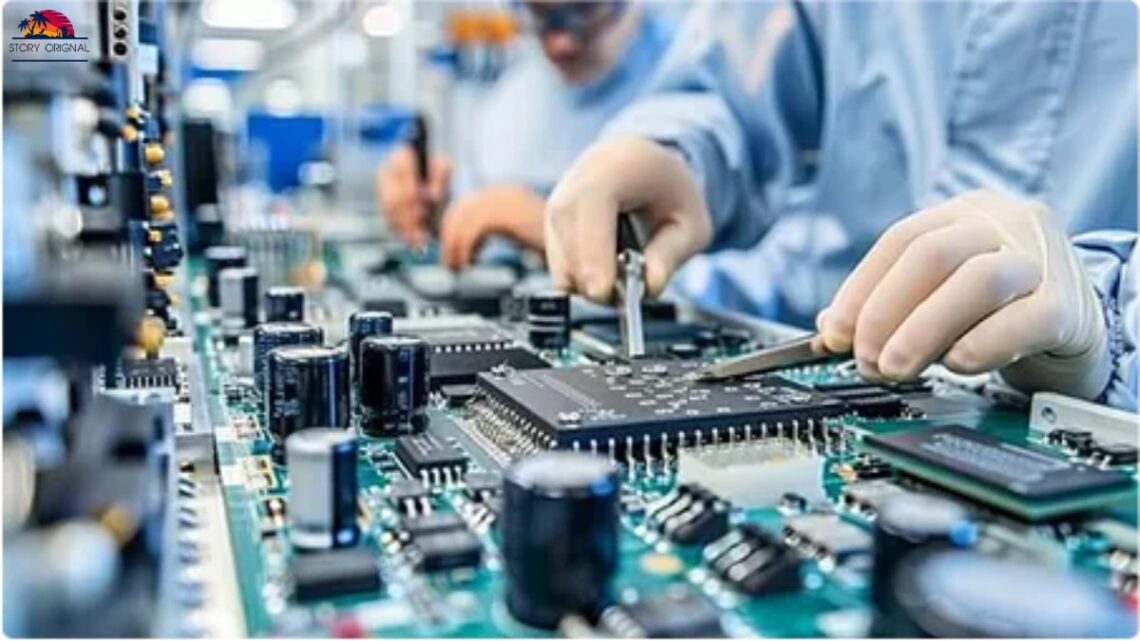
Printed circuit boards are the backbone of every modern electronic device, from smartphones and smart home systems to robots and advanced telecommunications equipment. As technology evolves, the demand for more reliable, compact, and high-performance PCBs continues to grow.
Whether you are designing industrial automation systems, medical devices, or next-generation telecom infrastructure, partnering with the right PCBA manufacturer. Quality, durability, aur efficiency ko ensure karna bohat zaroori hota hai.
Understanding PCB Fabrication and PCBA
Before choosing advanced PCB solutions, it’s important to understand the difference between PCB fabrication and PCB assembly (PCBA).
PCB Fabrication involves:
Designing the circuit layout
Selecting base materials (FR4, Rogers, Polyimide, etc.)
Layer stack-up configuration
Etching copper layers
Drilling and plating vias
Surface finishing (ENIG, HASL, OSP, immersion silver)
Electrical testing
This stage creates the physical board—the structure where electronic components will later be mounted.
PCB Assembly (PCBA)
refers to the process of mounting and soldering electronic components to the fabricated board. This involves:
SMT (Surface Mount Technology)
Through-hole assembly
Mixed technology assembly
Reflow soldering
Wave soldering
Inspection and functional testing
Together, PCB fabrication and assembly determine the performance, reliability, and functionality of an electronic product.
Why Advanced PCB Technology Matters
Today’s industries demand more than just basic circuit boards. Devices must:
Handle higher frequencies
Support compact designs
Perform reliably in harsh environments
Offer flexible mechanical structures
Deliver faster signal transmission
Reduce power loss and interference
To meet these expectations, manufacturers are developing advanced PCB technologies such as Rigid-Flex PCBs, High Frequency PCBs, HDI PCBs, and multi-layer boards capable of supporting complex electronic systems.
Compact aur Durable Electronics ka Mustaqbil: Rigid-Flex PCBs
Rigid-Flex PCBs combine the robustness of rigid boards with the flexibility of flexible circuits. Instead of using cables and connectors between multiple boards, Rigid-Flex technology integrates everything into a single interconnected structure.
Key Benefits of Rigid-Flex PCBs
Space Saving
Ideal for compact electronics and wearable devices.
Improved Reliability
Fewer solder joints and connectors mean fewer failure points.
Enhanced Durability
Excellent resistance to vibration, bending, and mechanical stress.
Lightweight Design
Perfect for aerospace, robotics, and portable electronics.
Where Rigid-Flex PCBs Are Used
Robotics and automation devices
Military and aerospace equipment
High-end consumer electronics
Medical devices like imaging systems and portable monitors
Industrial control systems
This technology is especially important in robotics, where compactness, precision, and durability are critical. Robots often move, bend, and operate in dynamic environments, making Rigid-Flex PCB solutions ideal.
High Frequency PCBs: Powering Fast and Reliable Communication
High Frequency PCBs are essential in industries where signal speed, low loss, and stability are required. Traditional PCB materials like standard FR4 are not suitable for very high-frequency applications because they can cause signal loss and distortion.
Instead, High Frequency PCBs often use materials such as:
Rogers
Teflon (PTFE)
Polyimide
Advanced composite laminates
Advantages of High Frequency PCBs
Stable dielectric constant
Low signal loss
Excellent impedance control
Heat resistance
Superior signal transmission
Applications of High Frequency PCBs
High Frequency PCBs are widely used in:
Telecommunications
5G base stations, antennas, communication modules, microwave transmission systems.
Automotive Electronics
Radar systems, vehicle communication systems, ADAS.
Aerospace
Satellite communication equipment.
Robotics and Automation
High-speed controllers, sensor communication systems.
With the trend toward faster networks and smarter automation, High Frequency PCBs continue to play a major role in technological innovation.
The Importance of Precision Manufacturing
Advanced PCB technology requires precision, experience, and advanced manufacturing facilities. A capable manufacturer must provide:
Modern Production Equipment
Automated pick-and-place machines
High-precision SMT lines
Laser drilling systems
High-speed imaging inspection systems
Strong Engineering Support
From design review to manufacturability optimization, skilled engineers ensure that every board performs as expected.
Strict Quality Control
Professional PCB and PCBA manufacturing relies on multiple testing and inspection processes including:
AOI (Automated Optical Inspection)
X-ray inspection
Functional testing
ICT testing
Flying probe testing
Reliable Material Selection
Choosing the right materials according to thermal, mechanical, and electrical requirements is essential for long-term performance.
Multi-Layer and HDI PCBs: Supporting Complex Modern Electronics
Modern devices often require dozens of interconnected circuits within a very small area. Multi-layer PCBs and HDI (High Density Interconnect) PCBs are designed to handle this complexity.
Benefits of Multi-Layer PCBs
Higher circuit density
Better performance stability
Reduced board size
Improved signal routing
Enhanced EMI shielding
Benefits of HDI PCBs
Microvias and fine lines for compact designs
Shorter signal paths for faster transmission
Better miniaturization
Lightweight, yet powerful
These technologies are widely used in smartphones, telecommunications systems, industrial machinery, advanced robotics, aerospace control systems, and medical instruments.
Applications Across Modern Industries
Telecommunications
Advanced PCB solutions enable high-speed data transmission, stable network performance, and 5G communication technology. From communication modules to base stations, PCBs ensure seamless connectivity.
Robotics
Robots rely on PCBs for motion control, sensors, power management, AI processing units, and communication systems. Durable and high-precision boards are essential for ensuring smooth and reliable robotic performance.
Industrial Automation
Automated assembly lines, smart factories, and industrial control systems depend on reliable PCBs for long-term, heavy-duty operation.
Consumer Electronics
Smart devices require lightweight, compact PCBs with powerful processing capabilities. Advanced PCB technologies make modern electronics smarter and more efficient.
Automotive Electronics
From electric vehicles to autonomous driving, PCBs power critical systems including control modules, sensors, navigation, and communication units.
Choosing the Right PCB and PCBA Partner
With so many options available, selecting the right manufacturing partner is critical. When evaluating a PCB or PCBA supplier, consider the following:
Experience and Technical Expertise
Look for a company with proven capabilities in advanced PCB solutions, not just basic fabrication.
Production Capacity
The right manufacturer should handle both prototypes and large-scale production efficiently.
Quality Certifications
ISO, RoHS, UL, and IPC compliance indicate strong quality standards.
Engineering Support
Professional guidance helps optimize design, reduce costs, and avoid production issues.
Global Service Capability
A manufacturer with international service capability ensures smooth communication, fast response, and professional support.
Final Thoughts
Advanced PCB technology is essential for powering the next generation of telecommunications, robotics, industrial automation, and smart electronics. Understanding PCB fabrication, PCBA processes, Rigid-Flex PCBs, High Frequency PCBs, HDI technology, and industry applications helps businesses make smarter technology choices. Reliable manufacturing, strong engineering support, and advanced production capabilities ensure stability, performance, and innovation. For companies searching for dependable expertise and advanced PCB solutions, trusted global partners like globalwellpcba.com help bring innovative electronic ideas to life with efficiency, precision, and quality.