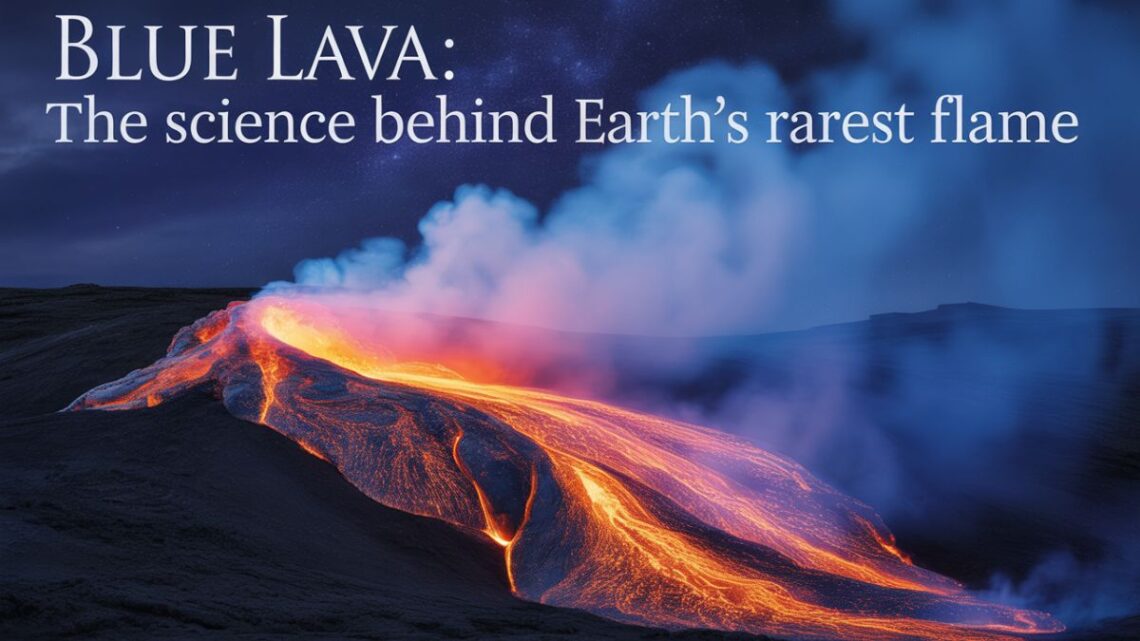
Blue Lava is one of nature’s most fascinating optical illusions, often captivating travelers, scientists, and photographers alike. Contrary to popular belief, this glowing blue flow is not molten rock but a rare phenomenon caused by burning sulfur, which ignites at high temperatures and flows down volcanic slopes at night. Found most famously at Indonesia’s Ijen Volcano, the effect occurs when sulfuric gases escape from volcanic vents and catch fire upon contact with oxygen.
The intense blue glow becomes visible only in darkness, creating the illusion of electric-colored lava streaming from the earth. This phenomenon highlights the complex interaction between volcanic activity, chemistry, and light. Beyond its visual appeal, blue lava also reminds us of the dangers associated with toxic gases and extreme heat near active volcanoes. For researchers, it offers valuable insights into sulfur combustion, while for visitors, it delivers an unforgettable encounter with one of Earth’s most rare natural phenomena.
What Is Blue Lava? – The Beautiful Illusion Explained Simply
Many people assume blue lava is molten rock glowing blue, but the reality is more fascinating. At Kawah Ijen, what appears to be glowing blue lava is actually burning sulfur, sometimes mixed with molten sulfur flowing down the volcano. The effect is most dramatic at night, when the bright neon-blue flames create rivers that look like flowing lava. Understanding this illusion requires looking at how sulfur is heated inside the volcano, escapes as gas, ignites instantly in the air, and sometimes condenses into liquid sulfur, continuing to burn as it moves.
- Deep inside the volcano, sulfur reaches extremely high temperatures.
- The sulfur turns into gas and escapes through vents.
- When the hot gas meets oxygen, it ignites instantly.
- Some gas condenses into liquid sulfur and continues burning, flowing like lava.
- At night, the effect creates glowing blue rivers that mesmerize observers.
Why Real Lava Is Never Blue – The Temperature Truth
Blue lava cannot exist naturally because the temperatures required to produce blue-colored molten rock are astronomically high. Real lava glows red, orange, or yellow because of the temperature range of molten rock. To reach blue, lava would need to heat up to 6,000°C (10,830°F) — hotter than the Sun’s surface. No volcano on Earth achieves this, making naturally blue lava impossible. The neon-blue rivers of Kawah Ijen, therefore, are not lava but burning sulfur, which can ignite at much lower temperatures and produce the striking electric-blue flames visible at night.
- Real lava glows red-orange.
- Blue color requires ~6,000°C.
- Burning sulfur ignites at 360–600°C.
- Hence, only sulfur can create the blue flame naturally.
The Science of the Blue Flame — Made Very Easy to Understand
The blue glow of Kawah Ijen is not just beautiful but also scientifically fascinating. It results from a phenomenon called electronic excitation, where heat energizes electrons in sulfur atoms. These electrons quickly return to their normal state, releasing energy as blue-violet light. Every element emits specific colors when burning, and sulfur’s signature color is electric blue. This simple atomic process explains why the flames at Kawah Ijen glow so vividly and appear almost supernatural, providing one of the most visually striking examples of chemistry in action on Earth.
- Sulfur atoms absorb energy and excite electrons.
- Electrons release energy as blue-violet light.
- Different elements have unique flame colors.
- This is why Ijen’s flames appear electric blue.
Why You Only See It at Night
The blue flames of Kawah Ijen are rarely visible during the day. Sunlight overpowers the relatively dim neon-blue flames, making them nearly invisible. At night, darkness enhances the contrast, revealing the full intensity of the glowing rivers. Long-exposure photography amplifies this effect, capturing the surreal appearance of flowing blue lava. Observers witness flames that seem to float above the volcano, creating an almost magical spectacle. Understanding why night is essential to seeing blue lava highlights the delicate interplay between natural light, human perception, and the unique chemistry of sulfur combustion.
- Daylight hides the blue flame.
- Darkness increases visibility.
- Flames appear more intense and magical at night.
- Photographers often use long exposures for dramatic effect.
The Geology of Kawah Ijen – Why This Volcano Is So Unique
Kawah Ijen is unlike any other volcano on Earth. Its unique geology produces constant blue flames that other volcanoes cannot replicate. Massive sulfur deposits, high temperatures, an acidic crater lake, and active fumaroles all combine to create the perfect conditions. The volcano’s hydrothermal system and sulfur-rich magma make it a natural laboratory for studying chemical reactions, geological processes, and environmental science. The rare combination of these geological features explains why blue flames are both consistent and vivid, establishing Kawah Ijen as the most remarkable blue-lava site in the world.
5.1 Massive Sulfur Deposits
- Sulfur is abundant near the surface due to volcanic activity.
5.2 Incredible Heat
- Fumaroles reach 400–600°C, ideal for ignition.
5.3 The World’s Largest Acidic Crater Lake
- pH between 0.2–0.5
- Color ranges from turquoise to milky blue
- Contributes to sulfur gas release
5.4 A Powerful Degassing System
- Fumaroles release SO₂, H₂S, and sulfur vapor
- High heat + gas mixture creates continuous blue flames
How the Blue Flames Move – The Flowing Sulfur Effect
The illusion of flowing blue lava results from the movement of molten sulfur. When sulfur gas cools at the surface, it becomes liquid, ignites, and flows downhill. This liquid moves faster than normal lava, creating long, glowing streams. The flames ride on the flowing sulfur, giving the impression of rivers of molten blue fire cascading down the mountain. This natural choreography combines chemistry, heat, and topography, creating a spectacle both dynamic and mesmerizing, making viewers feel as if the volcano itself is alive with neon energy.
- Gas escapes from vents and cools.
- It forms liquid sulfur.
- Liquid sulfur ignites and flows downhill.
- Flames appear as glowing blue rivers.
Other Places Where Blue Flames Occur (But Never Like Ijen)
Although Kawah Ijen is the most famous, blue flames appear sporadically in other parts of the world. Ethiopia’s Dallol Volcano, Yellowstone National Park, and Hawaii’s Kīlauea volcano have recorded similar phenomena. These locations occasionally produce blue flames when sulfur or methane ignites, but they lack the continuous, dramatic effect seen in Indonesia. Observing blue flames elsewhere is rare, unpredictable, and often temporary, making Kawah Ijen unique. Studying these global occurrences helps scientists understand the precise geological and chemical conditions required for blue flames to appear consistently.
- Dallol Volcano, Ethiopia: occasional blue flames
- Yellowstone, USA: rare wildfires ignite sulfur
- Kīlauea, Hawaii: methane gas produces blue flames
- Only Kawah Ijen has consistent nightly display
The Human Story – The Sulfur Miners of Ijen
Behind the ethereal beauty of Kawah Ijen lies a human story of courage and endurance. Sulfur miners work in hazardous conditions, breathing toxic fumes, walking on unstable slopes, and handling molten sulfur with minimal protection. They carry 70–90 kg of solid sulfur daily, navigating steep terrain while surrounded by blue flames. Their labor-intensive work earns them modest wages, yet they continue, demonstrating resilience in the face of danger. This human element adds a poignant depth to the spectacle of blue lava, reminding us that natural wonders are often intertwined with human survival and struggle.
- Work without protective gear
- Carry heavy sulfur loads
- Surrounded by blue flames nightly
- Dangerous but vital livelihood
Why Blue Lava Fascinates the World
Blue lava captivates people globally because it is a rare and visually stunning phenomenon that blends chemistry, geology, and visual art. Its otherworldly appearance challenges our understanding of volcanoes and Earth’s natural processes. Blue lava also symbolizes hidden forces of nature — secret chemical and geological processes usually invisible to the human eye. Observing blue lava inspires awe, curiosity, and respect for the Earth’s mysteries, reminding us that even familiar landscapes can harbor magical, scientifically explainable phenomena that defy ordinary perception.
- Challenges understanding of volcanoes
- Blends science with visual wonder
- Shows hidden forces of nature
- Inspires awe and curiosity
Conclusion
Blue lava is a rare natural spectacle combining sulfur chemistry, volcanic heat, flowing molten sulfur, and human resilience. It is not lava, magic, or a photographic trick — it is a living, breathing display of Earth’s power. Kawah Ijen provides a constant nightly show where science, geology, and human endurance converge, producing one of the most unforgettable phenomena on the planet. Observing it teaches us about the chemistry of flames, the dynamics of volcanoes, and the lives of the people who work amid this surreal spectacle, making blue lava a truly extraordinary experience.
- Not lava, not magic
- Sulfur + heat + human story
- Continuous blue fire at Ijen
- A spectacular natural, scientific, and human phenomenon